Product Description
| A.T.V. - Advanced Training Visualizer |  |
 |
|
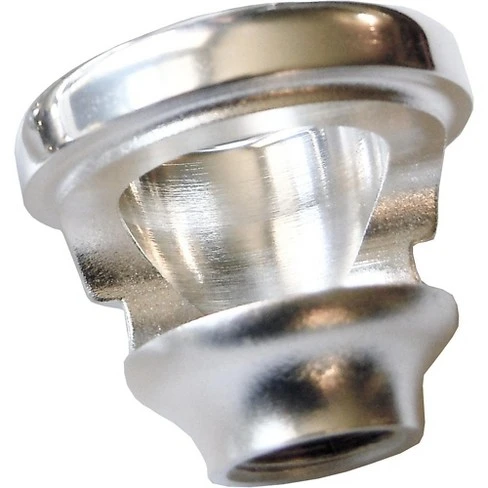
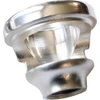
The objective is simple: To create a strong vibrant buzz across the entire width of the aperture (rim to rim). The A.T.V. provides an unadulterated raw assessment of the state of your buzz and becomes the ideal tool for making improvements in that area. The results are stunning: In addition to muscle conditioning, the A.T.V. will help you learn to maximize the quality of your buzz in the lower, middle, and upper registers - which will translate into very substantial results when playing your trumpet.
The Warburton A.T.V.:
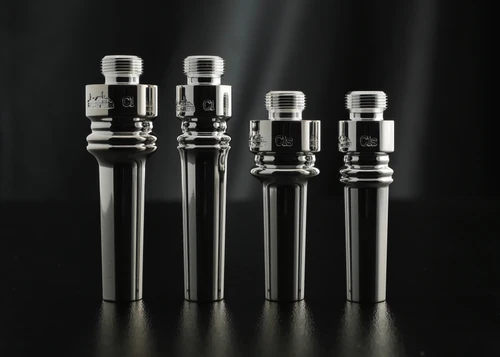
A.T.V. fits the Warburton backbore/shank you may already have, When using your A.T.V. there is no sound or air moving through the trumpet which means you What size A.T.V. do you need ? If you already play a Warburton mouthpiece, all the A.T.V. rim diameters are the same as our regular mouthpieces. For example, if you play a Warburton 4SV you would want the size 4 A.T.V. If you play another manufacturer's mouthpiece, our trumpet mouthpiece comparison chart may be able to help you find the Warburton size that matches your mouthpiece. For example, if you play a Schilke 15 you should order the size 3 A.T.V.
A relaxed aperture will greatly improve tone and efficiency. Start a buzz on the A.T.V. in a register where you can get a full, naturally loud buzz. Buzz a descending scale while trying to maintain a full buzz along the entire width of your aperture (from rim to rim). Hint: Do not relax the support muscles around the aperture. During the following days, try to work down to lower pitches. If you can buzz down to a low C on the A.T.V., you are doing great – into the pedal register, fantastic! When first starting out, even many experienced players cannot do this exercise well at all. They quickly improve and then are pleasantly surprised to hear an amazing improvement in lower and middle register tone quality. Use the A.T.V. for a high intensity workout These advanced exercises will push the limits of your physical capabilities. Advanced Exercise 1: Start in the middle register. Ascend upwards in siren-like glides extending your reach each time. Go for the highest pitch you can reach without a thinning of the sound or excessive arm pressure. You may be surprised at the amount of resistance that is created with this exercise. The A.T.V. will not allow you to have success until your breath is highly compressed and solidly supported and your aperture is relaxed! This is a very intense exercise intended for advanced players. Avoid pushing yourself beyond natural limits. You wouldn't go into a gym and begin with the heaviest weights without warming up, so likewise, don't attempt these without a good warm-up first. These ascending exercises are ISOTONIC, because they involve an active use of the muscles from relaxed to fully contracted. Our good friend and dealer in Japan, Taijiro Takeura, has published some good information about isometric vs isotonic exercises which can be viewed here. Advanced Exercise 2: This exercise combines Isometric and Isotonic techniques to build powerful control. Quickly ascend to the highest pitch you can achieve without strain or excess pressure. Immediately begin a slow, siren-like descending glide. Time your descent so that your entire air supply is depleted when you arrive at your target pitch. As you gain strength over the following weeks, the parameters on both ends will increase. This exercise can be compared to curling a barbell to your chest, and lowering it back down very slowly. It is very challenging and very taxing because you're focusing on TWO things simultaneously:
Remember, your muscles will only rebuild and gain strength during the rest time which follows - Please allow this process the time it needs to work. Regular practice will not interfere with your progress, but wait at least 48 hours until your next attempt at this exercise.
Free US Shipping
|
|||||||||||||||


Austin Custom Brass, ACB, Trent Austin, For sale, custom brass shop, Kansas City, kc, kcmo,